Bringing structure to a design system in motion.
I joined the platform design team to build and update components for a visual refresh of the platform's
design system. The scope was clear: construct components that aligned with the company's evolving design
language and worked reliably across the system. My role was execution. Building what the team needed, when
they needed it.
But the work quickly expanded beyond component production.
READING THE ROOM
The team was updating the design system without a shared framework for how to structure it. Explorations
lived alongside production-ready components in the same files. Multiple versions of the same element
existed without clear hierarchy. Until at one point, the term Atomic Design came up.
This became the pivot point for my contribution.
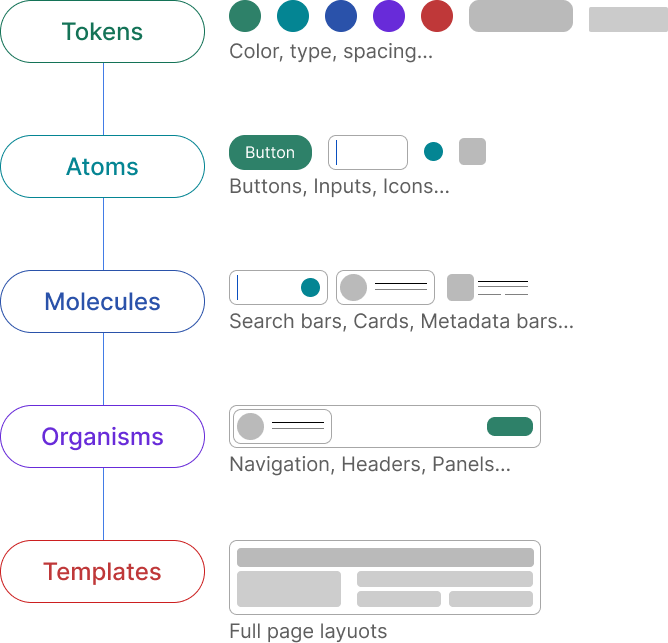
I introduced the team to atomic design methodology. How tokens, elements, components, and patterns nest
to form a scalable system. I walked through how this mapped to the way the company already structures its
other design systems, making the framework feel familiar rather than foreign. From there, I established
conventions for how to migrate components from exploration files to the production system without breaking
dependencies. A problem the team had been hitting repeatedly, because deleting an original exploration
component would orphan every instance built from it.
This wasn't a mandate from above. It was a gap I identified and filled because the team needed it and I had the knowledge.
BUILT TO LAST
The restructured system followed atomic principles and aligned with the company's broader design system
conventions. Components had clear relationships. What depends on what, what lives where, what's
safe to change and what will cascade. The file management practices I introduced reduced the version
confusion that had been slowing the team down.
More importantly, the team internalized a framework they could apply going forward. The conversation
that started with "do you know what atomic design is?" ended with engineering and design sharing a
common vocabulary for how the system should scale.